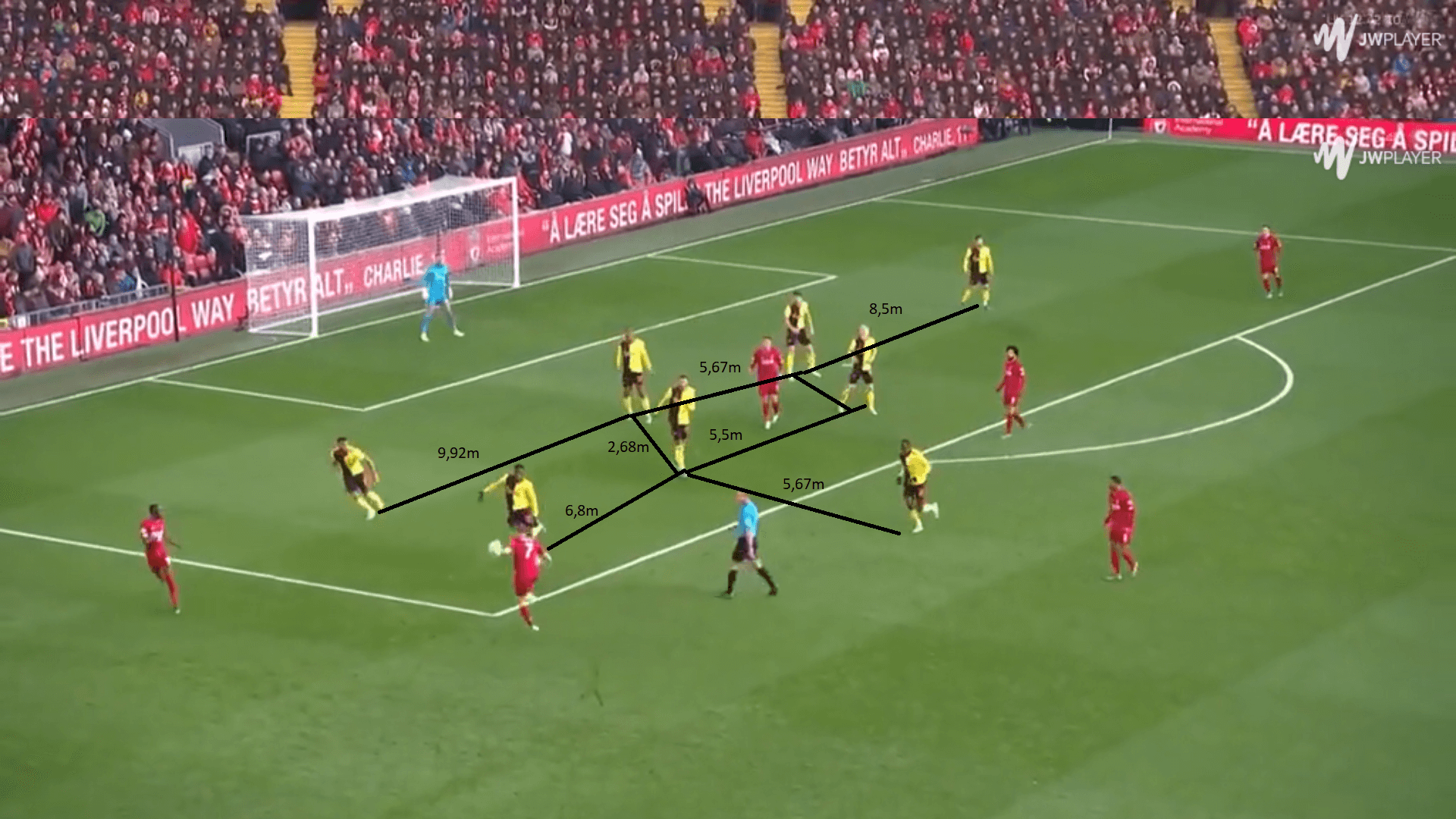
Low-block defending is not a passive fallback in Ligue 1 but a calculated structural response to disparity in technical quality, squad depth, and transitional risk. Many teams adopt compact defensive blocks to control space rather than possession, prioritizing survival of zones over ball circulation. Understanding this approach requires examining how the block is built, why it persists, and where it predictably breaks under pressure.
Why low-block defending remains structurally rational in Ligue 1
The league’s competitive balance makes low-block defending a rational choice for many clubs. Facing opponents with superior individual quality, teams often decide that reducing space near goal is safer than contesting midfield control. The cause is asymmetry in talent; the outcome is spatial compression; the impact is a match rhythm defined by patience versus resistance. This logic explains why low blocks appear even in home matches, where emotional incentives might suggest otherwise.
How low blocks are constructed across defensive lines
Low blocks in Ligue 1 rely on vertical compactness rather than aggressive engagement. Defensive lines retreat close to the penalty area while midfielders collapse inward to protect central lanes. Fullbacks rarely step out early, forcing opponents wide and slowing progression. This construction reduces high-quality shots but concedes territory, creating long phases of pressure that test concentration more than stamina.
Teams most associated with disciplined low-block execution
Several teams have consistently applied low-block principles with discipline. Clubs such as FC Nantes and Clermont Foot often prioritize structural integrity over pressing volume. Their defensive success depends less on duels and more on spacing, forcing opponents into predictable circulation patterns that limit clear chances despite sustained pressure.
Attacking outcomes typically produced by low blocks
Low-block defending reshapes how chances are created. Opponents generate higher shot volume but lower average shot quality, while defenders accumulate blocks and clearances rather than tackles. Over time, this causes matches to feel dominant on the ball yet inconclusive on the scoreboard. In Ligue 1, where finishing efficiency fluctuates, this trade-off frequently keeps underdogs competitive deeper into matches.
Common patterns observed when teams face low blocks
Before breaking down strengths and weaknesses, it is useful to outline the recurring patterns that emerge when low blocks are deployed. These patterns explain why some matches stall despite apparent dominance and why pressure does not always translate into goals.
Low-block matches often feature:
- High possession share for one side without central penetration
- Repeated wide recycling and crossing under pressure
- Increased blocked shots rather than clear saves
- Few counterpressing opportunities due to deep turnovers
Interpreting these patterns shows that low blocks are designed to absorb rather than repel pressure. The list highlights how defensive success is measured by shot location control, not possession denial. When these patterns persist, frustration increases for the attacking side, often leading to rushed decisions that favor the defending structure.
Strengths and structural limits of low-block defending
Low blocks excel at space denial but struggle with endurance and adaptability. They are effective against teams lacking off-ball movement or long-range shooting threat. However, repeated pressure increases error probability, especially late in matches. The concept works best when paired with counterattacking outlets; without them, defending teams become pinned indefinitely, increasing reliance on last-ditch interventions.
To clarify this balance, the table below summarizes core strengths and weaknesses of low-block defending as observed in Ligue 1.
| Aspect | Structural Benefit | Structural Risk |
| Compact spacing | Limits central shots | Reduces clearance distance |
| Deep line | Protects penalty area | Invites sustained pressure |
| Narrow midfield | Blocks passing lanes | Concedes wide overloads |
Interpreting the table emphasizes that each benefit carries an attached cost. Low blocks do not eliminate danger; they redistribute it toward less efficient attacking zones. Success depends on whether opponents can convert those zones into meaningful chances before fatigue or mistakes intervene.
Analytical interpretation in educational review
When studying low-block matches from an educational perspective, the key insight is variance management. Teams defending deep aim to narrow outcome ranges rather than maximize control. During analytical review sessions, observers evaluating tactical outcomes across a betting interface may encounter ยูฟ่า168 สล็อต while comparing how low-block structures influence totals or match tempo. The relevance lies in understanding how deep defending suppresses high-quality chances while extending match equilibrium, not in the platform itself.
Where low-block defending tends to fail
Low blocks fail when opponents introduce dynamic movement between lines or overloads that force defenders to step out. Once vertical compactness breaks, recovery is difficult because the structure depends on synchronized retreat. Ligue 1 sides with limited rotation options are especially vulnerable after conceding, as chasing games from a low block often requires abandoning the very structure that kept them competitive.
Conditional scenarios that accelerate breakdown
Early goals against low-block teams often trigger structural collapse, as the incentive to remain compact disappears and space opens rapidly.
Summary
Low-block defending in Ligue 1 is a deliberate, structurally coherent response to competitive imbalance. It prioritizes space control over possession, reduces shot quality, and stabilizes match outcomes despite sustained pressure. While effective under specific conditions, the approach carries predictable limits tied to fatigue, adaptability, and scoreline context. Understanding these mechanics clarifies why low blocks remain prevalent and why they succeed or fail in repeatable ways.